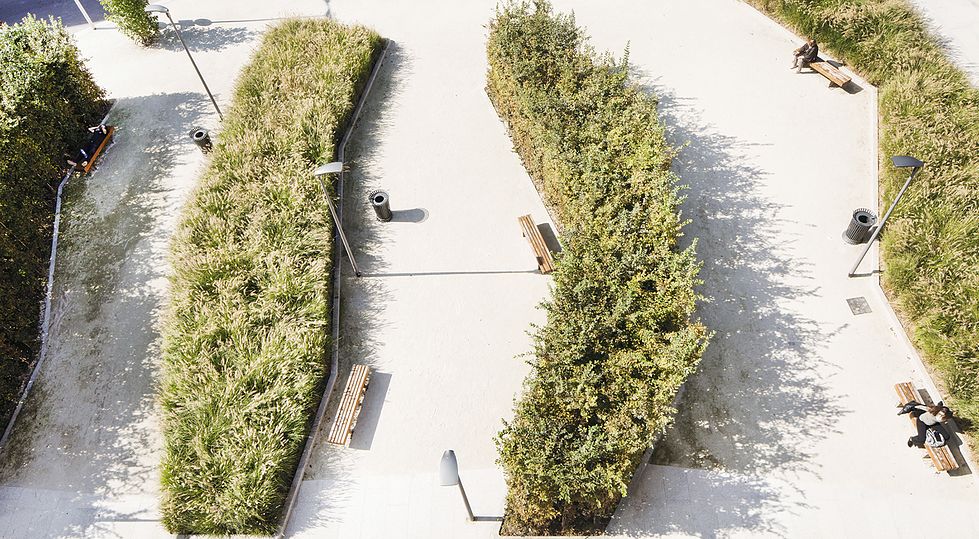
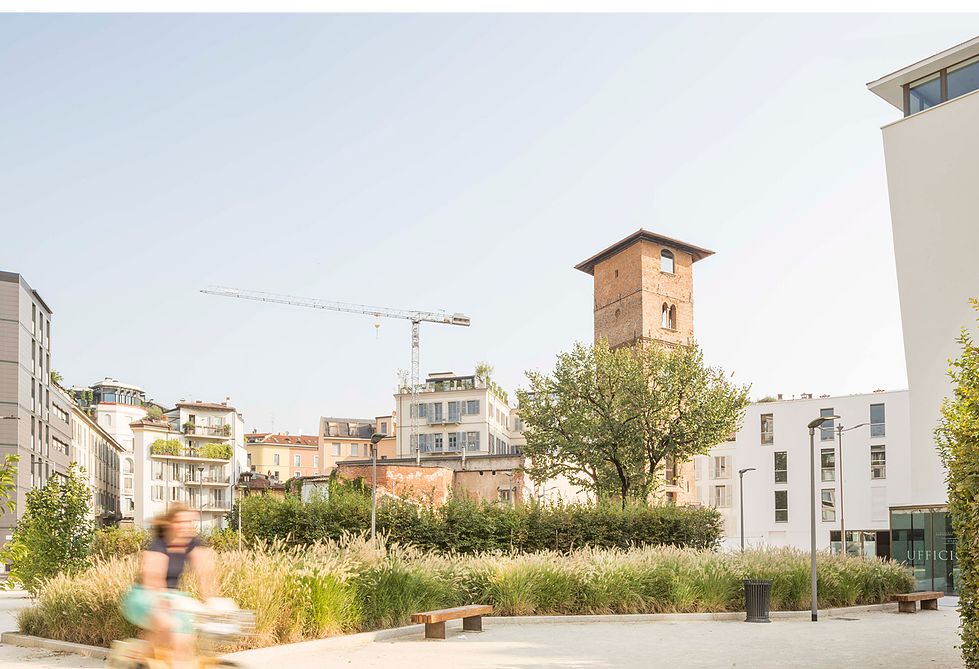
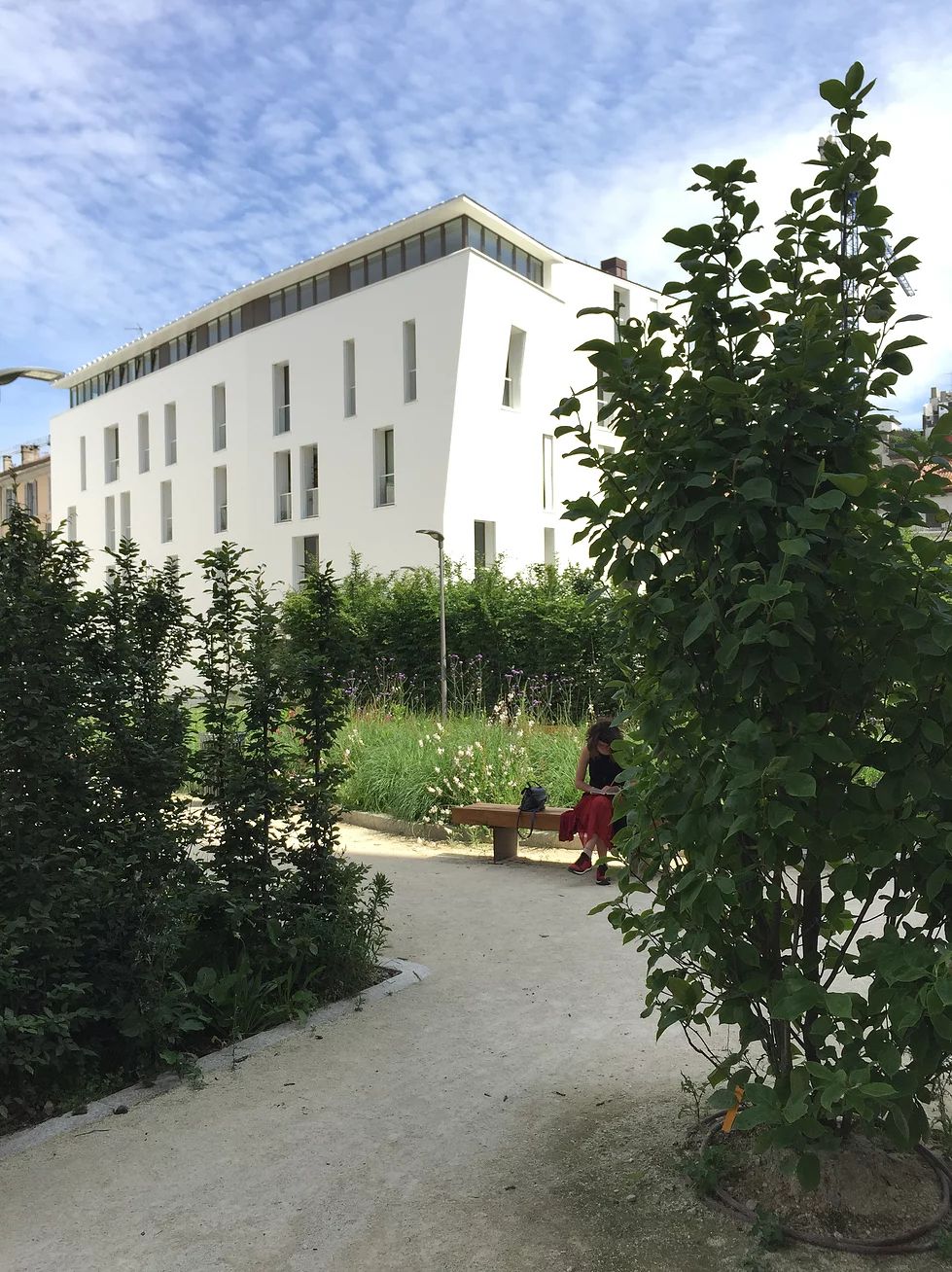
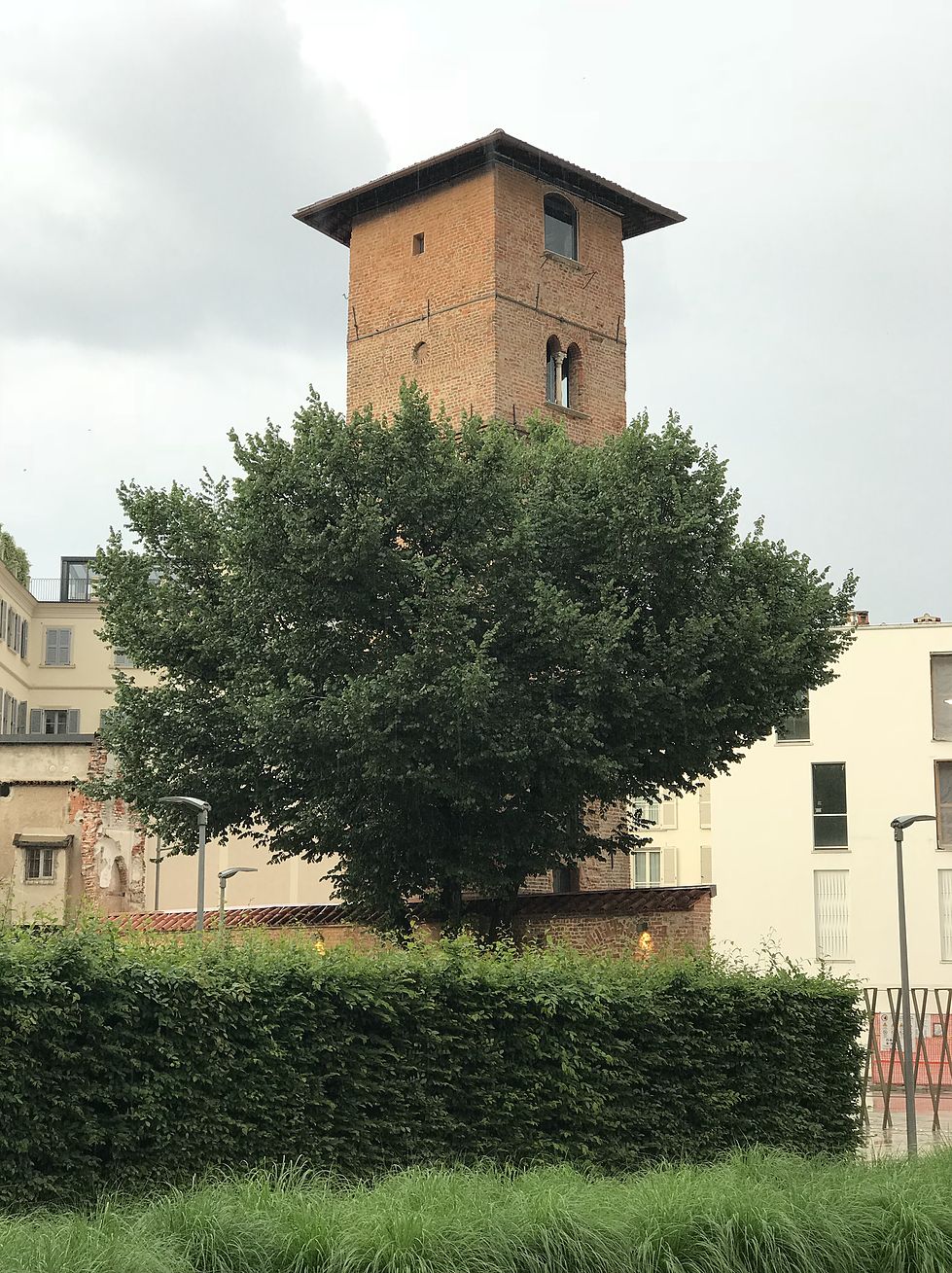
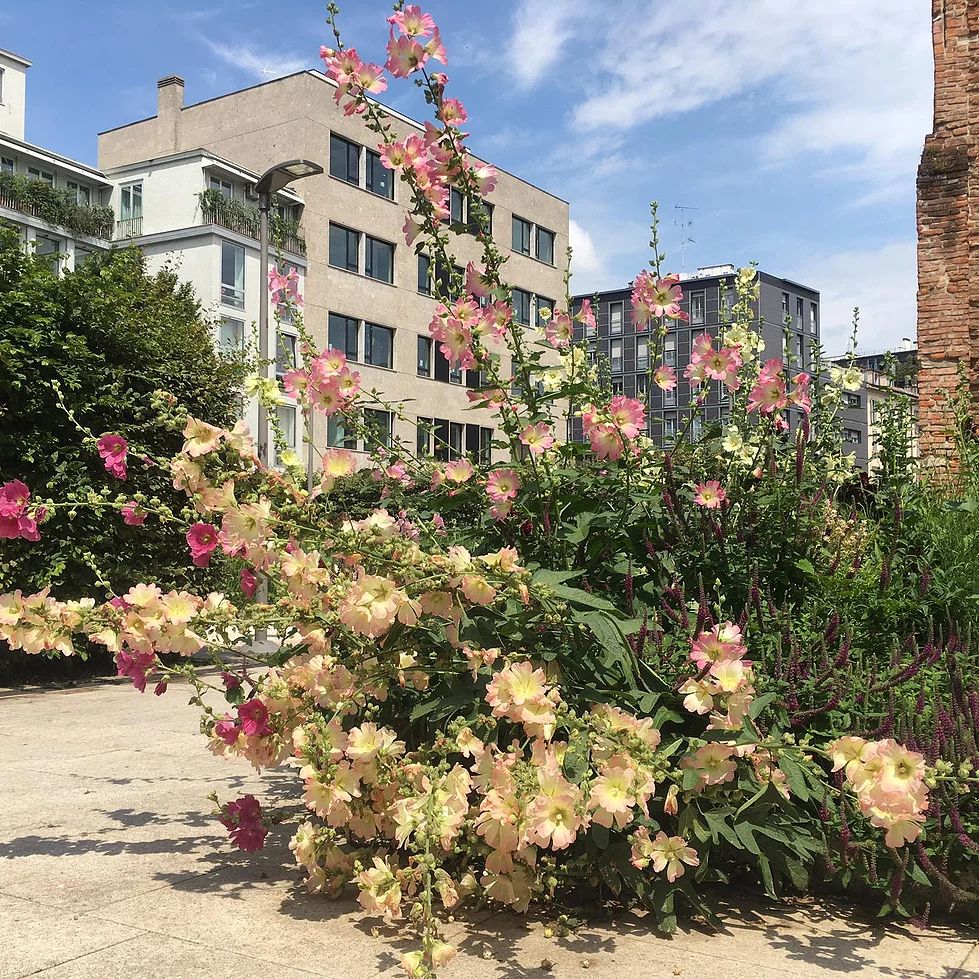
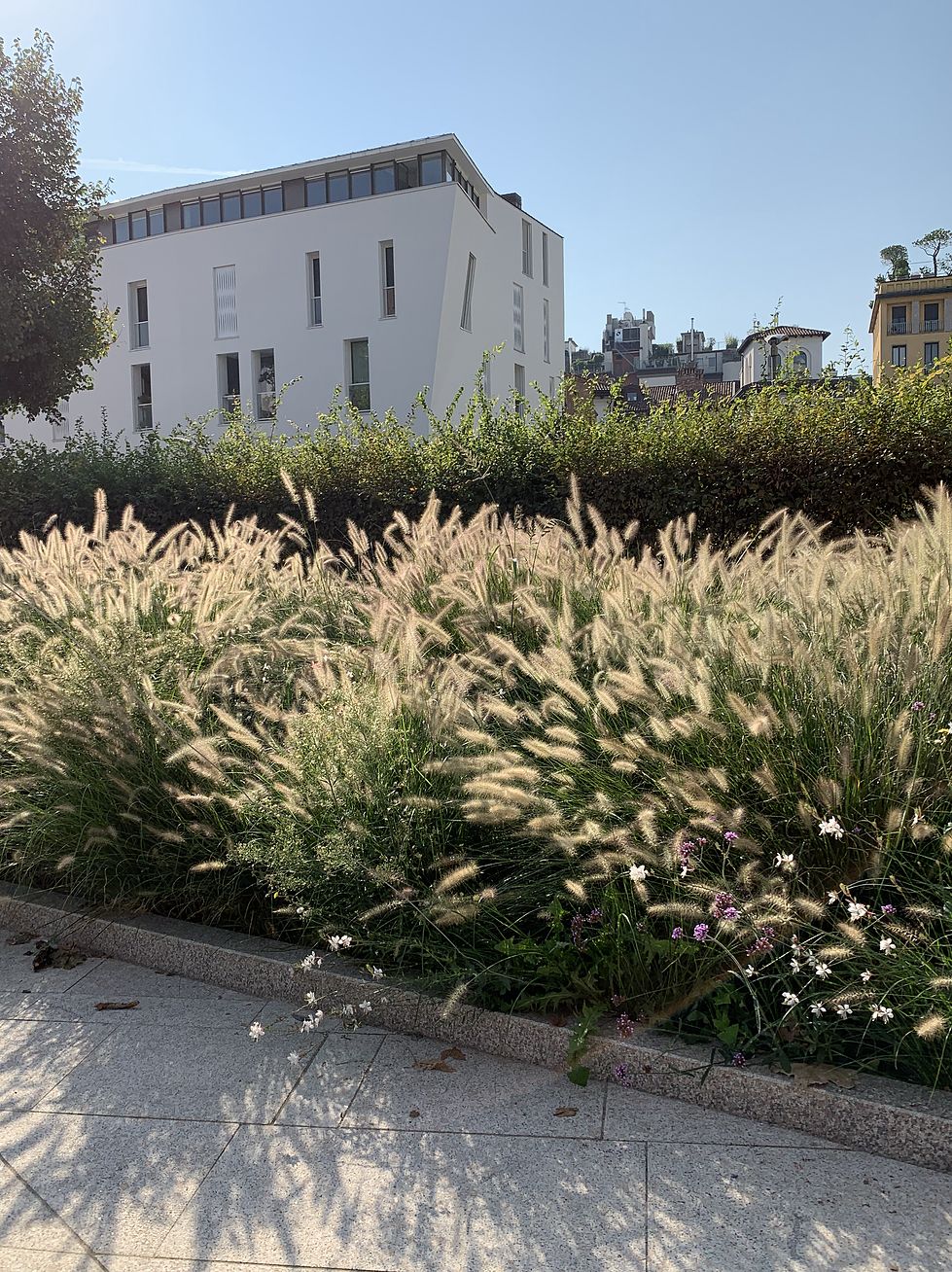
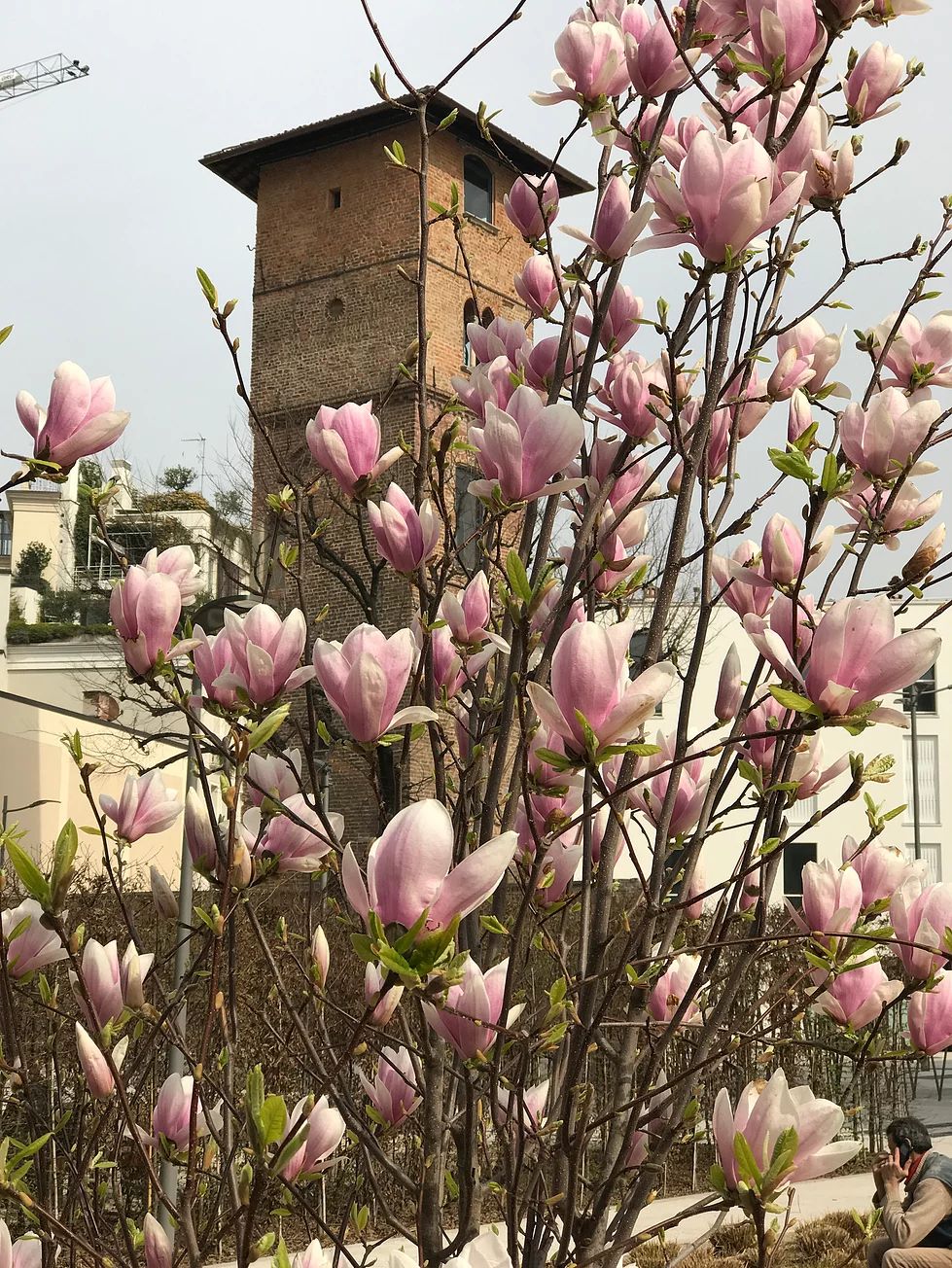
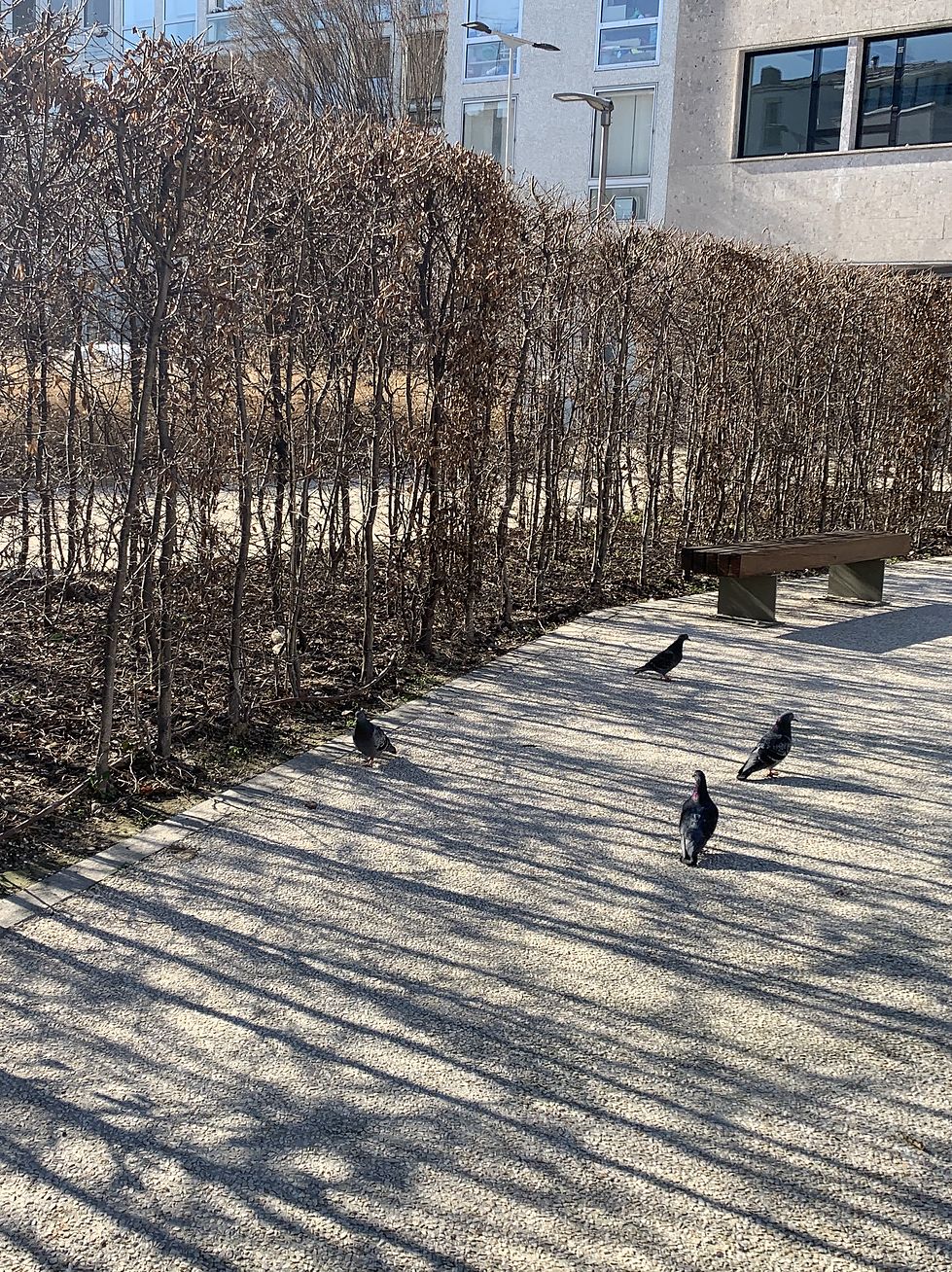
We are particularly fond of this public garden, because our Milano studio is just nearby in the same neighbourhood, and because we helped transform an ugly parking lot into a garden and a piazza, within the new pedestrian layout connecting Via Brisa to Piazza Affari. We believe there exists a landscaping principle in which architecture and plants can connect harmoniously, making room for each other whilst keeping the same power and value. This garden is found in the historic core of the city of Milano, located on the archaeological site of the Imperial Roman Villa; since after the War, the site had improperly largely been occupied by a car park. Our project was designed together with the architectural plan of Studio Cecchi&Lima; it relies on just a few very geometrical elements, highly characterised by plants. Towards the outside, we have magnolias along the street edge, to filter out the rare cars driving by – thus creating the atmosphere of an intimate, quiet garden. Inside, pleasant stays are allowed thanks to compact, squared hornbeam hedges, with their broken geometrical shapes; they alternate with an equivalent volume of ephemeral Gramineae, designing an evocative, subtle, and enticing sequence of open passages, inviting people to enter. Paving is designed to encourage and highlight through flow lines the new pedestrian walkways, and it relies on different materials to suggest new purposes: granite defines the walkways and piazza, draining concrete characterises stopovers in the greenery, all perpendicular to the Gorani tower with its fragment of Medieval wall protecting the lovely Elm tree we stubbornly rescued from the construction yard. Overall, this is a permeable site, where full and hollow spaces interplay to spontaneously welcome visitors towards the inside, leading them to discover a protected, unexpected corner of Milano. As you walk through the garden you move over to the neighbouring piazza, where surprising windows in the paving open to show Roman mosaics, under the tower, and other archaeological remains, and then again plants, flowers, and rich edges of perennials such as hollyhock, verbena, polygonum and eryngium. Contemporary requirements are, here again, complied with in an environmental-friendly way: the garden is low-maintenance and only needs a limited amount of water. (Photos 1 and 2 credit Filippo Romano).




Il Giardino Di Paolo – Villa Amagioia – Palazzo Di Varignana, Bologna
Imagine receiving a call from someone for whom you have already created a pharaonic project (that he then sold), imagine him asking for a new project and starting off by